

When a Great Season Doesn't Have a Great Ending
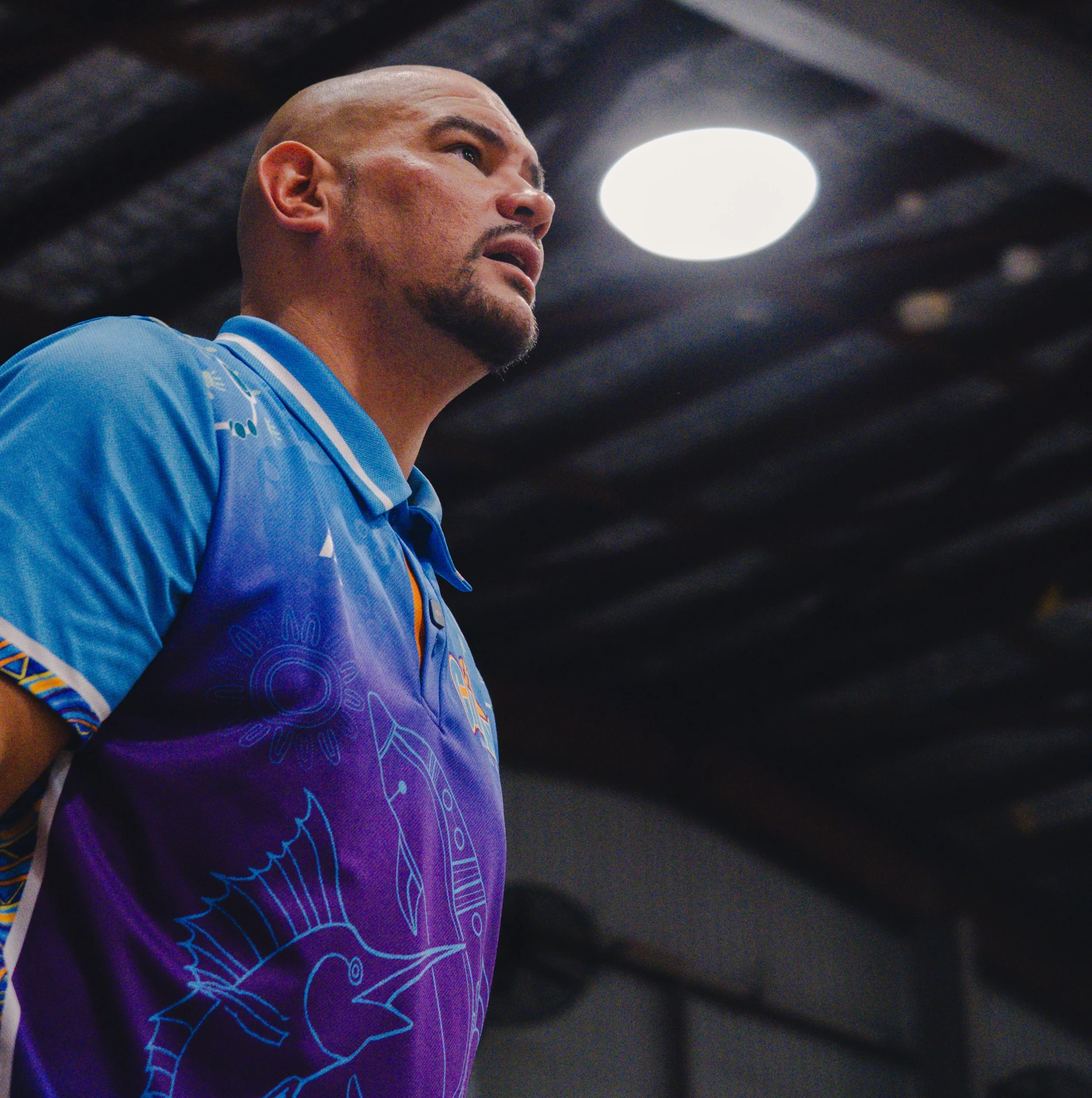
Picture: Simon Pope
There’s a strange emptiness that comes when a season ends.
One minute, everything matters. The next practice. The next scout. The next game. Then suddenly, it’s over.
For us in the NBL1 North, it ended much earlier than we wanted.
Our Cairns Marlins entered the 2026 season with high expectations. I’m not sure any of us could have predicted exactly what would follow.
Sixteen regular season games. Sixteen wins.
It was an incredible achievement and something this group should always be proud of.
But we stumbled when it mattered most and didn’t win the championship.
When the season ended, 16-0 didn’t make the disappointment hurt any less.
I’ve always struggled with losing. I don’t think that will ever change. Winning matters to me. Rings matter. Hanging banners matter.
We didn’t spend months preparing, training, watching film and asking people to sacrifice just so we could feel good about the journey.
We wanted to win. We believed we could win. And ultimately, we fell short.
But as some of the emotion has started to settle, I’ve found myself thinking about a question that probably has relevance well beyond basketball.
How do you define success when you achieve something extraordinary, but fall short of the thing you ultimately set out to achieve?
Maybe there isn’t a simple answer.
Because two things can be true at the same time.
We can be disappointed with how our season ended, and we can be incredibly proud of what we built. One doesn’t have to cancel out the other.
The Scoreboard Doesn't Tell the Whole Story.
Sport has a brutally simple way of measuring success. Someone wins. Someone loses. At the end of the season, one team lifts the trophy and everyone else goes home wondering what might have been.
That’s part of why I coach. There’s nowhere to hide. But leadership is more complicated than a scoreboard.
If the championship is the only measure of whether our season mattered, then everything that happened before our final game becomes irrelevant.
When I was a younger coach, I would have agreed. Reflecting now, I can’t accept that.
The majority of this squad finished last in the NBL1 North the season before. Change had to be direct, swift and with intent.
Our pre-season started with a team meeting and from that moment, the foundation began to take shape.
I saw standards rise. I saw roles accepted. I saw belief develop.
But what I became most proud of was a team beginning to understand that success sometimes means giving up a little of yourself for the people around you.
That sacrifice doesn’t appear in a win-loss column, but sometimes it matters the most.
Throughout the season we talked a lot about what it meant to represent the Cairns Marlins.
It became about more than basketball.
How we competed. How we responded when things weren’t going our way. How we represented the program in the community and the guys who had worn the jersey before us. How we thanked the people who came to watch us hoop at the Fish Tank.
Culture isn’t something written on a wall.
It’s what you repeatedly accept. It’s what you challenge. It’s what you’re prepared to hold each other accountable to when nobody outside the group is watching.
And for us, it was something we celebrated loudly with a team song.
By the end of the season, I genuinely believed this group had redefined what it meant to be a Cairns Marlin. No final result can completely erase that.
Winning Can Hide Things.
Going undefeated sounds perfect.
It wasn’t.
Winning has an interesting way of hiding problems.
When you keep winning, it’s easy to assume that what you’re doing must be working. Your preparation. Your systems. Your decisions. Your leadership.
Sixteen straight wins provide a lot of validation. Maybe sometimes too much.
Losing forces you to ask harder questions.
Since the season ended, I’ve replayed plenty of moments from the semi-final in my head.
What could I have done differently? What did I miss? Were there things we got away with during the regular season because we kept winning? Could I have prepared the group differently for finals?
Those aren’t comfortable questions, but they’re necessary.
Leadership isn’t just about demanding accountability from the people you lead. It starts with demanding it from yourself.
That doesn’t mean tearing everything apart because of one result. It means being honest enough to separate what worked from what didn’t.
Sometimes you can do a lot right and still lose. That might be one of sport’s hardest lessons.
What Remains.
So, was our season successful?
Immediately after it ended, I probably would have said no.
We had a goal. We didn’t achieve it.
But with some perspective, I don’t think the answer is that simple.
Would I trade 16-0 for the championship? Absolutely.
Would I change the goal if we had our time again? Not for a second.
But would I call everything we built a failure because we didn’t achieve that goal?
No.
The relationships were real. The growth was real. The standards we established were real. The history this group created was real.
Hopefully, the impact of what we built lasts longer than one season.
Maybe that’s one of the biggest lessons leadership continues to teach me.
You have to care deeply about the result without allowing the result to become the only thing that gives the work meaning.
The disappointment will linger for a while, as it should.
But eventually that disappointment has to sit alongside something else. Pride.
Not simply because we went 16-0.
But because of who we became along the way.
We didn’t get the ending we wanted. That hurts.
But perhaps the clearest measure of what you build isn’t always how it ends.
Sometimes it’s what remains after it’s over.